There’s something about Corned Beef and Cabbage that turns a regular night into a little celebration. The aroma sneaks through the house: savory beef simmering away, sweet carrots and onions joining the party, and cabbage softening until you just know it’ll melt on your tongue. I don’t just reserve this dish for St. Patrick’s Day—it’s become my anytime comfort feast when I want hearty, simple food that feels like a hug. It’s that rare combo of low-effort and big payoff, and after the first slice of brisket—deep pink, tender, ringed with that peppery edge—I always wonder why I don’t make it more often.
Corned beef has a bit of old-world nostalgia, the kind of recipe you might imagine simmering on a farmhouse stove. But the magic is how easily it comes together in a regular kitchen. Whether you’re gathering everyone for a holiday or just want leftovers for days, this Corned Beef and Cabbage is always a hit. Spoons clink into bowls of broth, plates cover with buttery potatoes and bright cabbage wedges, and the table gets somehow quieter as everyone digs in. Honestly, my only regret is not making a bigger batch.
When Corned Beef and Cabbage Brings Everyone to the Table
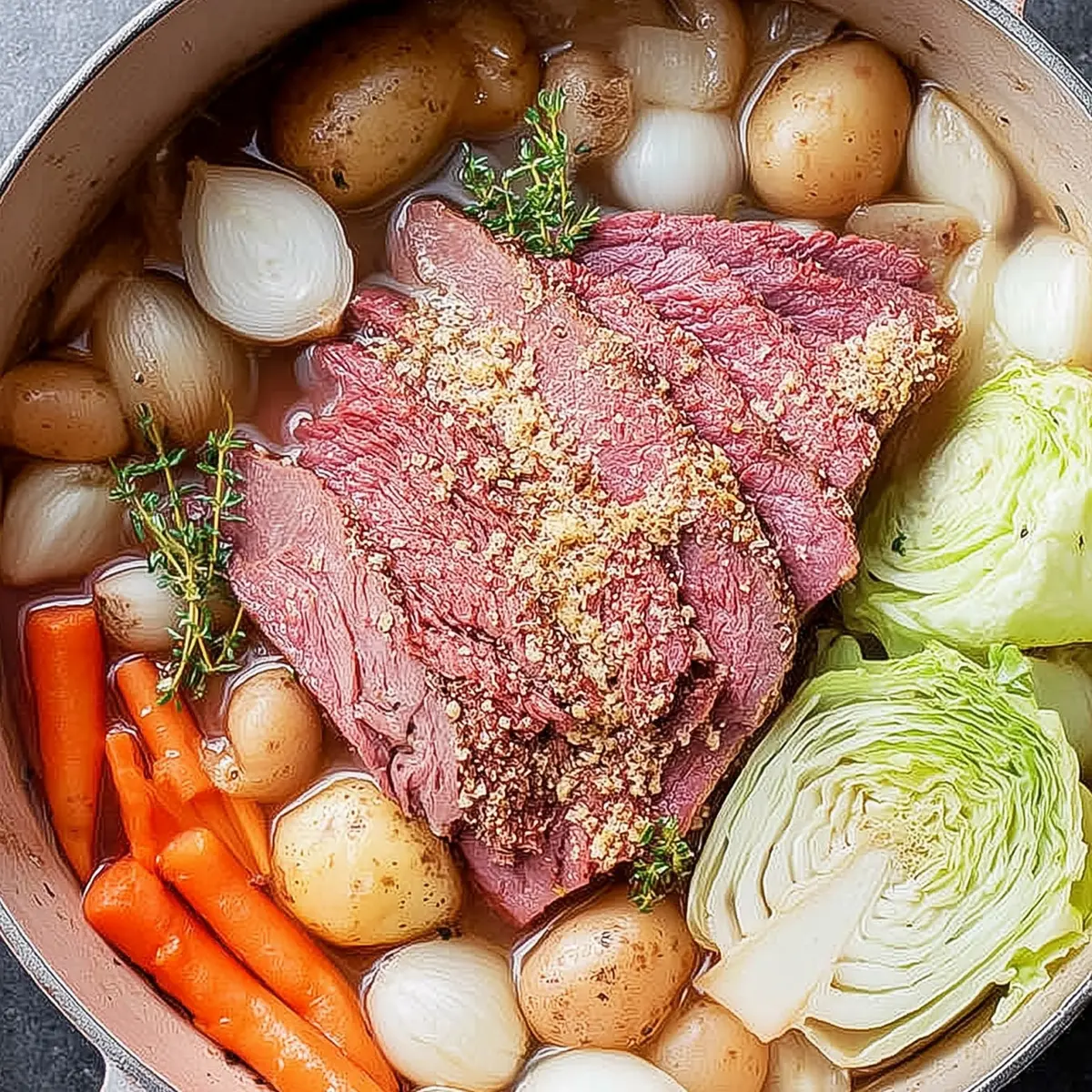
Picture a slow Sunday afternoon, steam curling from a heavy pot on the stove, and the kind of scent that makes people wander into the kitchen just to ask what’s cooking. Corned Beef and Cabbage is that dish. It’s more than just a holiday tradition—it’s a meal that draws people in, hungry for something honest and hearty. The beef simmers low and slow until it’s fork-tender and beautifully rosy in the center, while carrots, potatoes, and cabbage pick up all the flavor from the broth.
This recipe grew on me fast. The first time I made it, I couldn’t believe how much flavor you could coax out of just a handful of inexpensive veggies and a piece of corned beef. There’s a beautiful simplicity here. It isn’t fussy or pretentious. Instead, it’s rewarding in the way only real comfort food can be.
The Ingredients That Shape This Corned Beef and Cabbage
- Corned beef brisket – the heart and soul of this dish, cured and peppery with just the right balance of salty bite and tender chew.
- Bay leaf – brings in a subtle herbal note; you’d miss it if it wasn’t there.
- Cabbage – goes from crunchy to silky as it cooks, soaking in savory juices and offering a sweet counterpoint to the meat.
- Carrots – add a touch of sweetness and color, and their soft bite is welcome in every spoonful.
- Yellow onion – with a mellow, rounded flavor, it almost melts into the broth as it cooks.
- Russet potatoes – soak up the broth and provide comfort on the plate, though any waxy potato will do if that’s what’s lurking in your pantry.
- Water – essential for creating a rich, savory cooking liquid that flavors everything else.
- Butter + kosher salt – the finishing flourish; butter adds a creamy richness, and salt sharpens all the flavors to their peak.
See the recipe card below for the full list of ingredients and measurements.
Bringing It All Together for an Old-School Classic
First, get your brisket ready to become the centerpiece. Rip open the package, pat that beef dry (no need to fuss), and nestle it, fat side up, into your biggest, heaviest pot. Sprinkle on the spice packet—it’s a mix of peppercorns, mustard, bay, and good intentions—and tuck in the bay leaf. Add enough cold water so the meat is barely submerged. That’s your starting point.
Over medium heat, bring it just to a boil, then quickly drop it to the lowest simmer you can manage. Lid on, and now you wait. This is when you go about your business—read a book, tidy the kitchen, steal glances at the clock. After a few hours, that brisket starts giving up all its richness to the broth.
Once the meat is almost there, toss in the potatoes, carrots, and onion—no need to be precious, just chuck them in so they fall where they may. Bring the pot back to a gentle boil to edge those veggies toward tenderness, then wedge the cabbage in last. All it needs is a short steam, so don’t wander off. You want the cabbage yielding but not falling apart.
With everything tender and smelling outrageously good, pull it all out onto a big platter. Give the beef a quick rest—long enough for you to marvel at your handiwork—then slice it across the grain. That’s what keeps each bite so succulent.
Texture, Flavor, and the Perfect Slice
What’s wild is how each part of this Corned Beef and Cabbage dish shines in its own way. The brisket, with its rosy center and salty crust, slices into slabs that are both sturdy and tender—never falling apart, but just a nudge from your fork sends fibers separating juicily. Potatoes and carrots are soft enough to mash against your plate, yet still hold edges, carrying a faint earthiness sweetened by slow cooking. Cabbage—maybe my favorite bit—becomes lush and silky, holding onto just enough bite to make you want another forkful.
The broth is an unsung hero. Ladle it over everything, let it pool beneath your meat, or serve on the side like a bold, salty jus. That first bite is everything: beefy, vegetal, buttery, a little sweet, always warming you straight through.
Little Details That Turn Good into Great
A few tips from stumbling through many rounds of Corned Beef and Cabbage in my own kitchen:
- Keep your simmer gentle. No frantic boiling—just the softest, laziest bubbles. Too much heat, and the beef gets tough and your broth evaporates away before its work is done.
- Check your water level now and then. If things look low, top it up—better to have plenty of broth for serving.
- If you love a softer veggie, toss potatoes and carrots in earlier; want them firmer, wait a bit. Wedges of cabbage need only a quick steam at the end.
- For extra richness, dot cabbage and potatoes with butter while they’re still piping hot, and always finish with a flaky sea salt.
- Feeling adventurous? Swap a splash of beer for some water in the pot, or add a chunked turnip with the potatoes for a rustic twist.
- To store leftovers, pile everything into airtight containers, covering meat and veggies with a little broth to keep them moist. It reheats beautifully and some say it gets even better by day two.
Serving Corned Beef and Cabbage for Any Moment
Don’t let tradition dictate when you make this—it’s too good to save for just March. Serve Corned Beef and Cabbage family-style, with all the beef and veg on one big platter, ladle that gorgeous broth over the top, and pass around bread for dipping. Bright, tangy mustard or a dollop of horseradish takes it to another level, cutting through the richness in all the right ways. If you have leftovers (lucky you), try tucking slices of beef into sandwiches, or pan-fry potatoes and cabbage for an unforgettable hash the next morning.
Pair with a cold pint if you’re feeling festive, or let a mug of black tea round it out for something softer. This is the kind of meal that fits whether it’s rowdy with friends or just the two of you, elbows at the kitchen table.
FAQs about Corned Beef and Cabbage
How do I store leftover Corned Beef and Cabbage?
Let everything cool, then transfer meat and vegetables to airtight containers, ideally with enough broth to just cover them. Stored in the fridge, they’ll keep well for up to four days. When you’re ready to reheat, do so gently—either on the stove with a splash of broth or in the microwave until warmed through.
Can I freeze Corned Beef and Cabbage?
Yes, you can freeze both the corned beef and most of the vegetables. Slice the beef and package it tightly, removing as much air as you can. Potatoes and carrots freeze reasonably well; cabbage tends to soften even more, but it’s still tasty if you’re not too fussy. Thaw overnight in the fridge before reheating.
What are good substitutions for cabbage or potatoes in this recipe?
If you’re out of cabbage, try savoy or even kale for a different twist, though the texture will change a bit. For potatoes, any waxy variety will work, and even sweet potatoes can be nice for a hint of sweetness. Parsnips or turnips also give a lovely rustic flavor if you want to mix up the veg.
How do I reheat Corned Beef and Cabbage without drying it out?
Add a splash of leftover broth to your brisket slices and veggies, cover, and warm on a low stovetop or in the microwave. This keeps everything tender and moist. Avoid high heat or extended cooking times, which can dry out the meat and turn veggies mushy.
Corned Beef and Cabbage is proof that simple food, made with patience and good ingredients, can be downright spectacular. Whether you’re dishing it up for a special dinner or just want to dive into something deeply comforting, the flavors and textures come together like an edible memory—warm, familiar, a touch nostalgic. I always look forward to that first bite: brisket with melting cabbage and buttery potatoes, everything slicked with savory broth. Maybe give yourself a quiet hour, let the pot do its work, and settle in for a meal that’s every bit as soul-soothing as it’s meant to be.
More Delicious Recipes
- St. Patrick’s Day Lucky Chow: This snack board celebrates the flavors of St. Patrick’s Day, making it a fun companion to your Corned Beef and Cabbage meal.
- Guinness and Irish Cheddar Macaroni and Cheese: Combining rich flavors, this mac and cheese offers a festive twist that pairs well with hearty dishes.
- Crispy Irish Bacon Potato Skillet: With bacon and potatoes as main ingredients, this skillet dish brings similar comfort and flavors that complement your main meal perfectly.

Corned Beef and Cabbage
Ingredients
Equipment
Method
- Prep Brisket: Remove brisket from packaging (rinse off if you desire or pat dry). Place in a large (5.5qt) Dutch Oven or other large pot - fat side up.
- Spices + Water: Take spice packet from brisket package and sprinkle on top of brisket; add in bay leaf. Add water until brisket is barely covered (approx. 5-6 cups).
- Cook/Simmer: Bring to a boil; Cover and reduce heat and simmer for approx. 3 hours (for a 3 pound brisket) or more (you can prepare your vegetables during this time). Tip - Make sure it stays on a nice simmer - if it boils you may lose too much water during this process.
- Add Veggies: After approximately 3 hours of simmering, add potatoes, carrots, and onion. Cover and bring back to boil for 5-10 minutes (feel free to boil the potatoes/carrots longer if you prefer a softer texture, but they will be cooked for an additional 5-10 minutes in the next step).
- Add Cabbage: Then add cabbage wedges, cover again, continue boiling for an additional 5-10 minutes (this essentially steams the cabbage).
- Remove + Rest: Remove the cabbage, potatoes, carrots, onion and corned beef and place on a large plate or platter. Let the meat rest 5-10 minutes, sliced against the grain and then serve.
- Serving Suggestion: Serve the cooking liquid/broth as "au jus" poured over the meat. Serve cabbage and potatoes with butter and salt.