There’s something wild about how the smell of cinnamon and brown sugar can turn an ordinary day around. Whenever I make this Cinnamon Roll Cake, it fills the whole house with that dreamy, hug-you-from-the-inside aroma—like someone just fluffed up the clouds and drizzled them in icing. It’s all the comfort (and gooey pleasure) of homemade cinnamon rolls, but you don’t need a rolling pin or a free afternoon. Just a mixing bowl, a baking pan, and a bit of anticipation.
The first time I baked this cake, I’d been craving cinnamon rolls but didn’t have the patience to fuss with yeast. This recipe skips waiting for dough to rise—no yeast, no kneading—just simple, honest cake batter, swirled with pockets of butter, brown sugar, and cinnamon filling. The results? They’re oddly magical. Each slice lands somewhere between breakfast and full-on dessert.
Trust me, folks devour it warm, when the icing slowly melts into golden valleys on top. I’ve watched people reach for seconds before finishing their first. Friends have “stopped by” for a quick visit, only to linger at the counter, swiping crumbs when they think I’m not looking. This Cinnamon Roll Cake has become my safety net bake, the one I know will disappear no matter the crowd or the occasion.
The Moment Cinnamon Roll Cake Steals the Show
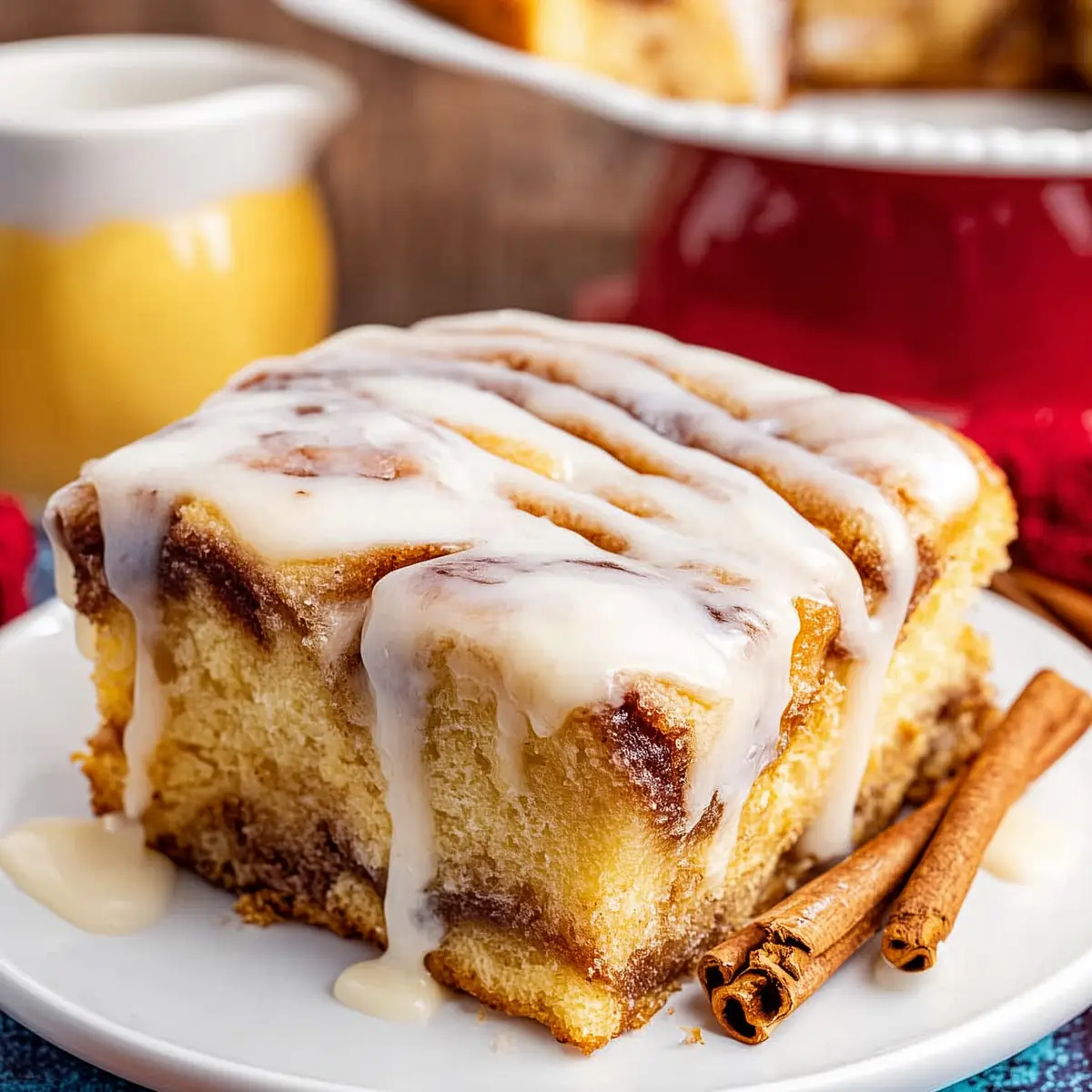
You don’t need a birthday or big event as an excuse for baking this cake. In my experience, Cinnamon Roll Cake transforms random Tuesdays into something you’ll remember. Cut a generous chunk while it’s still warm, and the swirled layers of cinnamon filling practically beckon with that sweet, gooey pull you expect in a top-notch cinnamon bun.
It works just as brilliantly for weekend brunch, potluck tables, or cozying up next to a mug of coffee after a long day. The first slice always vanishes in a blink, but the real magic happens when someone sneaks a second helping, fork in hand, caught between delight and guilt. That’s how you know it’s a winner: when even the baker can’t resist licking the glaze from the corner of the pan.
The Ingredients That Set This Cake Apart
Even if your kitchen isn’t fully stocked, you’ll probably have most of these on hand. It’s the combination—rich dairy, a bold splash of vanilla, and a double hit of cinnamon—that hooks you in.
- flour – gives structure to both cake and filling; all-purpose is best, but you can try bread flour if you want a chewier bite.
- White granulated sugar – adds a clean sweetness that balances all that spice; essential for tenderness in the cake layer.
- Baking powder – the silent force lifting everything up and making the crumb light.
- Eggs – bring richness, color, and structure; you could try subbing in flax eggs, but you’ll notice a flavor shift.
- Vanilla extract – for warmth and a little roundness—real vanilla makes a real difference here.
- Milk – keeps things moist and makes the crumb soft; whole or 2% is ideal, but any milk works in a pinch.
- Salted butter – two uses: melted for the batter and softened for the filling; that hint of salt wakes up the sugar and spice, so don’t skip it.
- Light brown sugar – caramel notes shine in the cinnamon filling; if you use dark brown, expect a deeper, almost toffee-like hit.
- Ground cinnamon – the main event; freshly opened cinnamon has the most vibrant punch.
- Powdered sugar – whisks into a smooth, dreamy icing that slides into all the crevices on top.
- Milk (for glaze) – creates that pourable, shiny finish; you can thin it for a sheer drizzle, or leave it thick for dramatic ribbons.
See the recipe card below for the full list of ingredients and measurements.
Building That Buttery Cinnamon Swish
Baking this Cinnamon Roll Cake is more about layering and swirling than any fancy technique. First, preheat your oven and give your baking dish a good mist of nonstick spray—if you have the kind with flour, reach for that.
Stir together your dry ingredients in a roomy bowl, then blend in eggs, milk, and vanilla. While the mixer purrs (or your whisk arm gets a light workout), trickle in the melted butter. The batter should smooth out but still look soft—don’t overmix or you’ll lose that tender cake edge.
Pour the batter into your prepared dish, letting it find its own level. Now comes the heart of the operation: the cinnamon filling. Blend the softened butter, brown sugar, extra flour, and that mountain of cinnamon until it’s thick and spreadable. Spoon it over the batter in chunky dollops. It won’t look elegant yet—wait for the next part.
Take a butter knife and make big, swooping patterns through both batter and filling. Get creative; aim for deep, looping swirls that’ll make the baked slices gorgeous and textured inside. Once you’re happy with your design, slide the pan into the oven. As it bakes, the filling will burrow and bubble into the cake, creating veins of sticky, aromatic cinnamon throughout.
Keep an eye out in the final minutes. The cake should be golden at the edges, and a tester poked into the center should come back mostly clean (you might hit a pocket of filling and that’s okay).
The Moment When Cake Meets Glaze
The real drama happens after baking, when the still-warm cake gets its icing. Mix up your glaze: powdered sugar, milk, and vanilla, whisked until smooth and glossy. Adjust the consistency—add more sugar for thick, cascading stripes, a splash of milk for a sheer, sweet finish. Taste a fingerful (quality control, right?).
Pour the glaze all over the cake while it’s warm. It will hiss and melt and slide into every swirl, soaking into the crumb and creating gooey pools at the edges. Let it sit for a little if you want nice, clean slices—or just dig in for those perfect sticky forkfuls.
Texture, Flavor, and That First Forkful
If you’re wondering what this cake feels like in your mouth, think soft but substantial—like cinnamon rolls reborn as the best coffee cake you’ve ever demolished. The crumb is moist yet fluffy, the swirls of cinnamon-brown sugar filling are dense and just a hint chewy in places.
Each bite delivers a punch of spice, mellowed by vanilla and buttery richness. The contrast between the caramelized top, swirled filling, and that sweet glaze makes every forkful layered and outright comforting. The cake holds together well for slicing, but don’t be surprised when everyone picks at the gooey corners first.
Little Touches for Cinnamon Roll Cake Success
Want your Cinnamon Roll Cake to be talked about for weeks? These details can turn a good bake into a legendary one:
- Don’t overmix the batter after adding flour—stop as soon as it’s combined for a soft, tender crumb.
- For extra depth, try adding a pinch of nutmeg or a splash of maple extract to the filling.
- Let the butter for the filling get truly soft, almost spreadable, so it whips smooth with the sugar and cinnamon.
- If you want cleaner slices (and less mess), let the cake cool a bit after glazing, even if it’s hard to wait.
- For make-ahead ease, you can bake the cake, cool, cover, and glaze before serving; it keeps well at room temp for a day or two.
- Leftovers store beautifully, wrapped tightly. Zap a piece in the microwave for that just-baked warmth.
- Swap brown sugar for coconut sugar or use a gluten-free flour blend if needed, but know the texture will shift a little.
Serving Ideas That Make This Cake a Hero
Serve wedges of this cake at breakfast with strong coffee or for dessert with a big scoop of vanilla ice cream. It fits in at baby showers, bake sales, and holiday brunches—there’s honestly no wrong time.
For special occasions, dress it up with chopped toasted pecans or a dusting of extra cinnamon powder on top. If you’re feeling bold, drizzle warm caramel or add a few berries for tart contrast. And don’t be surprised if you find yourself cutting thin “taste test” slivers all night long—it’s that kind of cake.
FAQs about Cinnamon Roll Cake
Can Cinnamon Roll Cake be made in advance?
Absolutely. Bake the cake ahead, let it cool, and keep it covered at room temperature without the glaze. Add the glaze right before serving for the freshest look, or store glazed leftovers and warm gently before enjoying.
Can you freeze Cinnamon Roll Cake?
Yes, you can freeze individual slices or the whole cake (unglazed works best) wrapped tightly in cling film and foil. Thaw at room temperature or gently in the microwave, then add glaze if needed before serving.
What substitutions work if I don’t have all the ingredients for Cinnamon Roll Cake?
If you’re short on brown sugar, white sugar with a touch of molasses makes a decent swap. Any milk will work, including dairy-free options, and margarine can stand in for butter in a pinch. If you’re out of vanilla, a hint of almond essence brings a different note.
How do I keep the cake moist after baking?
Let the cake cool completely before wrapping it well in foil or an airtight container. If storing longer than two days, refrigerate and warm leftovers before eating. The glaze helps trap in moisture, so don’t skip it.
There’s always room for another recipe that sparks a little joy with every bite—and Cinnamon Roll Cake never disappoints. Whether you bake it for lazy weekends, as a holiday brunch centerpiece, or simply to treat yourself on a wild whim, this cake turns ordinary days into something beautiful and a little bit sweet. Pull the pan from the oven, breathe in that spicy-sugared warmth, and serve it up while the glaze still shines. Moments like that are what baking is really all about.
More Delicious Recipes
- St. Patrick’s Day Chocolate Guinness Bundt Cake with Stout Glaze: This cake brings rich flavors and a moist texture, making it a delightful dessert similar to the comfort of Cinnamon Roll Cake.
- Green Velvet Cupcakes with Cream Cheese Frosting: These moist cupcakes have a luxurious frosting, perfect for when you’re in the mood for a sweet and festive treat.
- St. Patrick’s Day Brownie Trifle: Layered with brownie goodness, this dessert offers a rich, chocolatey experience similar to the indulgence of a Cinnamon Roll Cake.

Cinnamon Roll Cake
Ingredients
Equipment
Method
- Preheat oven to 350F degrees. Spray 9x13-inch baking dish with nonstick cooking spray (I like the kind that has flour in it.) In a large bowl (or the bowl of your stand mixer), combine 3 cups all-purpose flour, 1 cup white granulated sugar, 4 teaspoons baking powder, 2 large eggs, 2 teaspoons vanilla extract and 1 1/2 cups milk.
- While your mixer is running, slowly add 1/2 cup (1 stick) salted butter, melted. Mix just until combined (overmixing flour in baked goods can make it tough and rubbery.)
- Spread this batter evenly into your prepared baking dish.
- In a small bowl, combine 3/4 cup salted butter, softened to room temperature, 1 cup packed light brown sugar, 2 Tablespoons all-purpose flour and 1 Tablespoon ground cinnamon. Stir until combined well.
- Drop the cinnamon filling by spoonfuls onto the cake batter.
- Take a butter knife and make swirly, marble-effect patterns all around the cake. Drag the knife through both the cinnamon and cake batter.
- Bake the cake for about 35-40 minutes (it took about 40 minutes in my oven), until a knife inserted into the center comes out clean.
- Whisk together 2 cups powdered sugar, 5 Tablespoons milk and 1 teaspoon vanilla extract in a bowl. If you want it thicker, add more powdered sugar and if you want it thinner, add more milk.
- Pour the glaze over the warm cake. This cake can be served warm or at room temperature but I think it's easier to slice if you allow it to cool first.