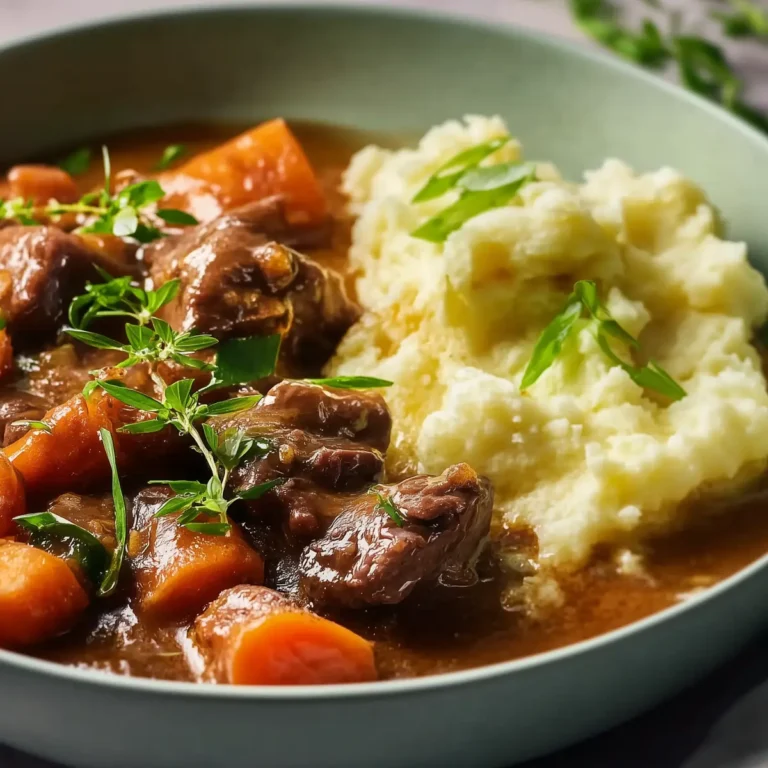
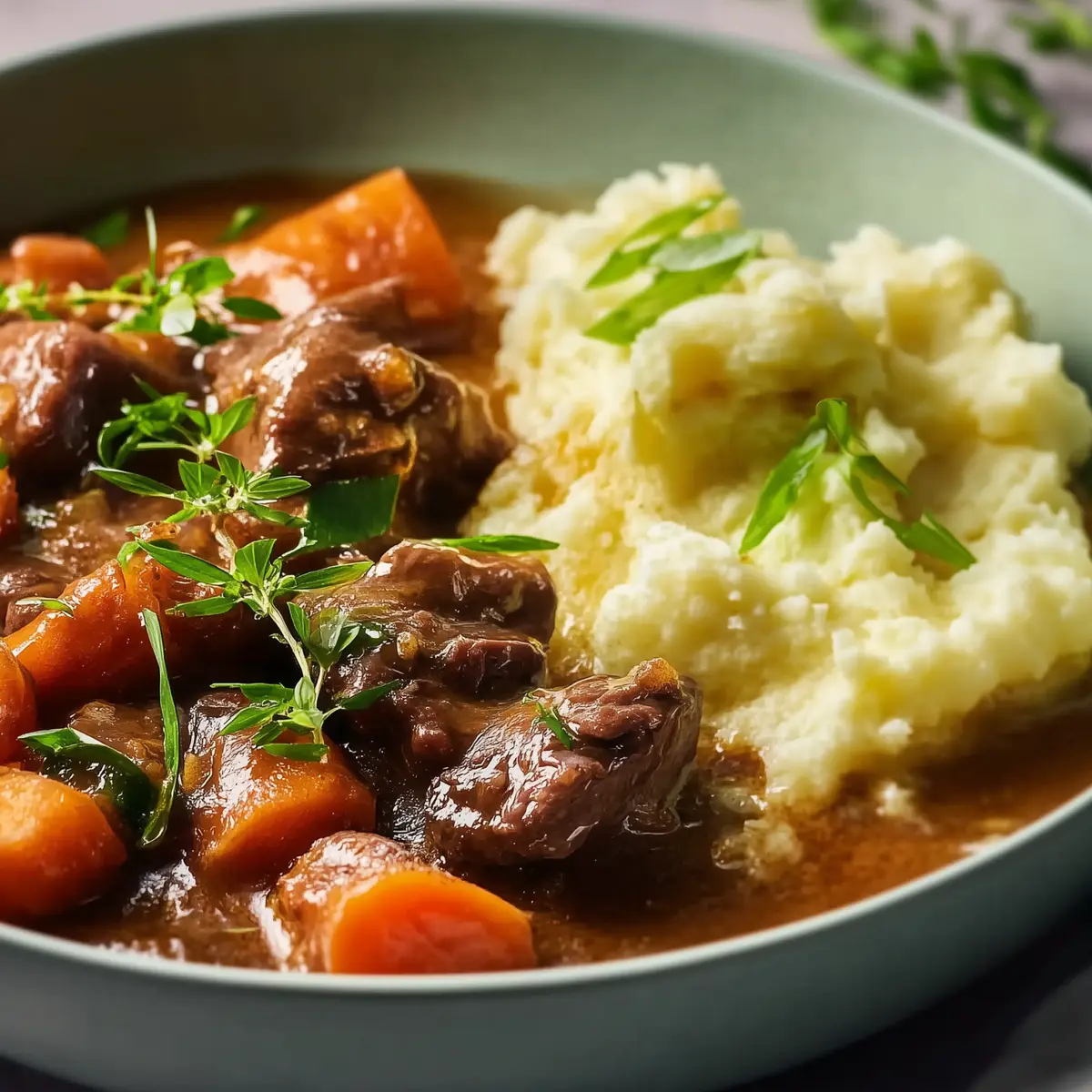
There’s nothing that signals home quite like the aroma of a Slow Cooked Irish Stew with Colcannon bubbling away on the stove. The scent is deep and a little earthy, with roasted beef mingling with Guinness and sweet carrots, thyme, and bay leaf—warmth you can smell before you even take a bite. This is the kind of meal I find myself turning to on blustery evenings, when I want every forkful to taste hearty and a little nostalgic. The slow simmer draws every bit of flavor from simple, honest ingredients, while the creamy colcannon on the side soaks up every last drop. It’s comfort in a bowl, with just enough Irish charm.
What Makes This Slow Cooked Irish Stew with Colcannon So Irresistible
If you’re dreaming of the kind of stew that seems to warm you from the inside out, this Slow Cooked Irish Stew with Colcannon brings all the elements you want: chunks of tender beef, carrots that turn sweet and buttery-soft, and a broth saturated with stout and aromatic herbs. The real magic here is how it’s not just filling—it’s layered, savory, and a little rustic. The slow simmer means every ingredient has time to get cozy together, releasing flavors you just can’t rush.
Pairing that old-school stew with a rich, creamy colcannon—a mound of mashed potatoes folded with greens—transforms everything. The stew’s juices seep into the mash, giving you bites that are both hearty and silky. Whether it’s served up as a Sunday dinner or you’re stashing leftovers for a busy weeknight, there’s a warmth here that goes beyond the bowl.
The Ingredients That Give This Stew Its Deep Irish Flavor
Quality ingredients are what set this Slow Cooked Irish Stew with Colcannon apart. Here’s how each one plays its part:
- olive oil – creates a rich base for browning the beef and adds a depth you’ll taste in every spoonful.
- Chuck roast – provides the perfect marbling for fork-tender meat after a slow cook; stew beef or brisket work too.
- Onion – adds natural sweetness and softens right into the broth for extra roundness.
- Celery – gives backbone and a little herbal edge to balance the richness.
- Garlic – brings deep, aromatic flavor that builds up as it cooks.
- Guinness stout – the classic Irish touch; gives the broth complexity, a little maltiness, and dark color.
- Beef stock – creates a robust, savory foundation for the stew to develop real body.
- Tomato paste – sneaks in a bit of tang and amps up that savory umami note.
- Worcestershire sauce – ties the whole pot together with a savory, slightly tangy depth.
- Salt and pepper – essential for getting all the flavors to bloom.
- Thyme – brings a woodsy, herbal note that loves slow simmering.
- Bay leaves – their subtle aroma rounds out the broth with that signature stew fragrance.
- Carrots – not just for color; they turn candy-sweet as they cook down and add comfort-food heartiness.
- Smoked paprika – just a touch to add gentle smokiness, making each bite a little more memorable.
- Parsley – freshens everything at the very end with grassy brightness.
See the recipe card below for the full list of ingredients and measurements.
Bringing This Slow Cooked Irish Stew with Colcannon to Life Step by Step
It all starts with a heavy pot and a little patience, letting the flavors build as you layer the ingredients. Here’s how it all comes together:
- Warm a sturdy Dutch oven or heavy pot over medium-high heat and drizzle in olive oil. Sear the beef cubes in batches until they’re golden-brown on all sides—this step is what lays down the flavor foundation, so don’t rush it.
- Once the meat is browned, move it to a plate. Drop the chopped onion and celery into the same pot and cook until they start to soften. As they sizzle, they’ll loosen those delicious, caramelized bits from the bottom.
- Add garlic and tomato paste, cooking until both are fragrant and the paste takes on a subtle brick-red hue. Pour in the Guinness, scraping the pot with a wooden spoon, catching every dark, malty note swirling up in the steam.
- Return the beef to the pot along with beef stock, Worcestershire sauce, thyme, smoked paprika, a pinch of salt and pepper, and the bay leaves. Stir, then scatter in the carrot slices. Make sure everything’s nestled nicely under the broth for even cooking.
- Bring everything to a gentle simmer. Lower the heat, cover, and let the stew bubble away slowly. After a good stretch of slow cooking, the beef will be meltingly tender and the broth thickened into a rich, dark sauce.
- When you’re ready to eat, finish the stew with a shower of parsley and check the seasoning. If you’re making colcannon to serve alongside (as you should!), whip up your mashed potatoes and greens while the stew gently cools—ready to soak up all the savory juices.
The Secret to Rich Flavor and Melt-in-Your-Mouth Texture
Getting that unforgettable slow cooked flavor isn’t about fancy technique; it’s about patience and letting everything mingle. The trick is to take your time with the searing—well-caramelized beef means deeper taste in the finished stew. Don’t shortcut the browning, even if you’re in a hurry. Let the broth simmer low and slow after you add in the liquid; a gentle bubble coaxes every bit of flavor and keeps the meat juicy.
Fresh herbs at the end bring in brightness. Sprinkling chopped parsley over the bubbling pot just before serving transforms the whole stew, adding a hit of green and garden-fresh aroma. And when you dig in, the contrast between the saucy, tender stew and the buttery, oniony colcannon makes every bite feel like a celebration.
Tips, Variations, and Serving Ideas for Irish Stew with Colcannon
A few small tweaks can make this Slow Cooked Irish Stew with Colcannon your own. Use lamb in place of beef for an old-school twist, or toss in parsnips and potatoes with the carrots if you want extra sweetness and heft. For a richer, silkier broth, try adding a knob of butter at the very end.
If you’re after extra depth (or making this for St. Patrick’s Day), stick with Guinness, but any robust stout will lend that malty character. For a meatless route, swap in mushrooms and extra root veg—they soak up the broth beautifully.
Leftovers keep well in the fridge, and the flavors deepen after a day or two. Store any extra stew in airtight containers, and if you’d like, freeze portions for later. Reheat gently, stirring as you go to keep everything creamy and even.
Serve the stew piled over pillowy colcannon, ideally with plenty of parsley on top and a slice of crusty bread nearby to mop up every drop. It’s equally at home as a centerpiece for Sunday suppers or casual weeknights when you want something soothing.
FAQs about Slow Cooked Irish Stew with Colcannon
Can I make Slow Cooked Irish Stew with Colcannon ahead of time?
Absolutely. In fact, the flavors develop and deepen if you make the stew a day in advance. Just store it in the fridge and gently reheat on the stove when you’re ready to serve. Colcannon can be made fresh or prepped a few hours ahead and reheated.
Can I freeze leftovers of this Irish stew?
Yes, the stew itself freezes well. Cool completely, portion into freezer-safe containers, and store for up to three months. Defrost overnight in the fridge, then reheat gently to maintain that silky texture. Colcannon is best enjoyed fresh but can also be frozen, though some texture may be lost.
Are there substitutions for Guinness in Slow Cooked Irish Stew with Colcannon?
If you don’t have Guinness, any dark stout works well, or you can use additional beef stock for a simpler, alcohol-free version. The stew won’t have quite the same malty backbone, but it will still be deeply flavorful.
What’s the best way to reheat Irish stew with colcannon?
Warm the stew gently in a covered pot over low heat, adding a splash of water or stock if the sauce has thickened too much. Reheat colcannon in the microwave or in a pot with a dash of milk or butter, stirring until smooth.
Can I use a slow cooker for this stew?
Yes, you can. Sear the meat and sauté the aromatics first for the best flavor, then transfer everything to the slow cooker. Let it cook on low until the beef is fall-apart tender—just keep an eye on the liquid level, as slow cookers don’t reduce as much as stovetops.
After a long, gentle simmer, there’s nothing quite like settling down with a warm bowl of Slow Cooked Irish Stew with Colcannon. The beef practically melts, the broth is deep and comforting, and the colcannon on the side soaks up every bit of rich sauce. When the weather turns chilly or you just need a taste of home, this is the meal that delivers that cozy, gathered-around-the-table feeling—every single time.
More Delicious Recipes
- St. Patrick’s Day Chocolate Guinness Bundt Cake with Stout Glaze: This cake beautifully incorporates Guinness, making it a perfect companion to your Irish stew theme.
- Guinness and Irish Cheddar Macaroni and Cheese: A creamy, cheesy dish that matches the hearty comfort of a traditional Irish meal.
- Crispy Irish Bacon Potato Skillet: This dish features familiar Irish flavors and ingredients that complement the stew’s rustic charm.

Slow Cooked Irish Stew with Colcannon - thegirlskitchen
Ingredients
Equipment
Method
- Warm a sturdy Dutch oven or heavy pot over medium-high heat and drizzle in olive oil. Sear the beef cubes in batches until they’re golden-brown on all sides—this step is what lays down the flavor foundation, so don’t rush it.
- Once the meat is browned, move it to a plate. Drop the chopped onion and celery into the same pot and cook until they start to soften. As they sizzle, they’ll loosen those delicious, caramelized bits from the bottom.
- Add garlic and tomato paste, cooking until both are fragrant and the paste takes on a subtle brick-red hue. Pour in the Guinness, scraping the pot with a wooden spoon, catching every dark, malty note swirling up in the steam.
- Return the beef to the pot along with beef stock, Worcestershire sauce, thyme, smoked paprika, a pinch of salt and pepper, and the bay leaves. Stir, then scatter in the carrot slices. Make sure everything’s nestled nicely under the broth for even cooking.
- Bring everything to a gentle simmer. Lower the heat, cover, and let the stew bubble away slowly. After a good stretch of slow cooking, the beef will be meltingly tender and the broth thickened into a rich, dark sauce.
- When you’re ready to eat, finish the stew with a shower of parsley and check the seasoning. If you’re making colcannon to serve alongside (as you should!), whip up your mashed potatoes and greens while the stew gently cools—ready to soak up all the savory juices.